FPN Edge Operating System
Industrial Operations & ERP
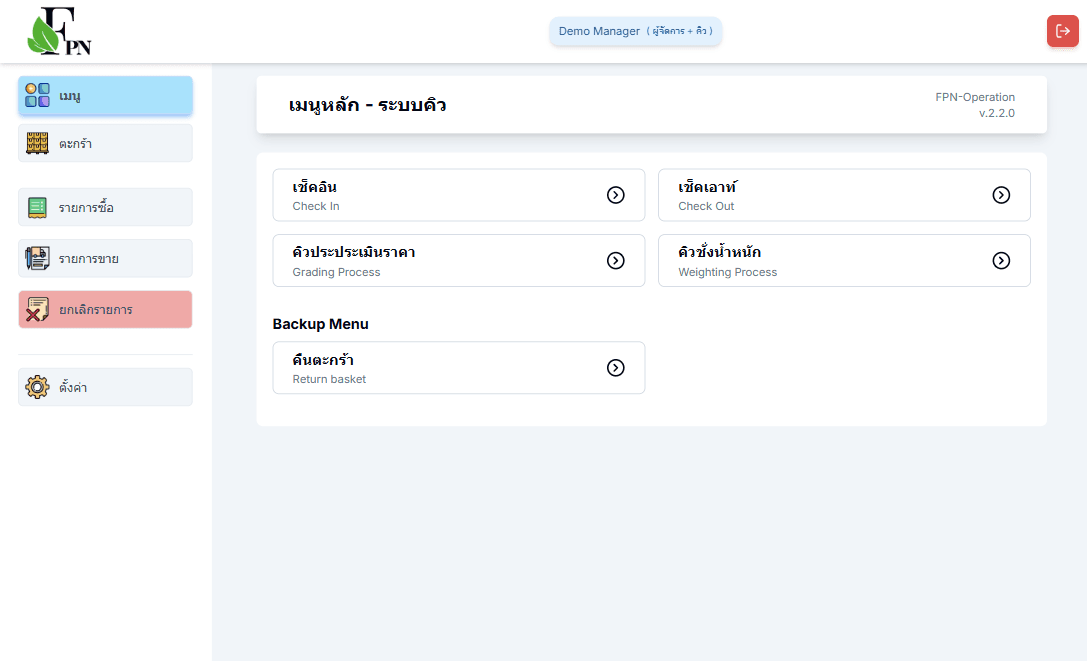
Problem & Solution
On-floor operations were plagued by process drift, where staff relied on human memory and fragmented paper trails, leading to frequent errors in pricing and weight recording. Without a guiding system, fraud risks were high—including incorrect payment amounts and data leaks to competitors. Furthermore, the lack of performance tracking meant management had zero visibility into station efficiency or customer wait times.
I architected a Local-First operating system that replaces manual memory with digital guardrails. By utilizing low-cost mobile devices and tablets, the system guides staff through standardized stations. We implemented industrial-grade hardware integration and QR-code tracking for every transaction to ensure a verifiable chain of custody. The system utilizes RBAC to protect sensitive customer data and dedicated internal APIs to fetch weight data from FPN-Scale and member profiles from FPN-CRM, ensuring staff only see information strictly necessary for their current task.
Key Features & Business Impact
- End-to-End Workflow Orchestration: Digital management of the customer journey from entry to final payout.
- QR-Driven Transaction Security: Unique QR identifiers for each ticket to prevent duplicate or fraudulent entries.
- Hardware-to-Software Bridge: Direct, authorized communication with FPN-Scale for immutable weight data.
- Paperless Station Management: Tablet-optimized interfaces replacing manual logbooks and paper slips.
- Data Leak Prevention: Strict RBAC ensuring customer contact and pricing info is shielded from unauthorized personnel.
- Hybrid Cloud Synchronization: Local-first performance with real-time cloud data backup for multi-site visibility.
Technical Deep Dive
Orchestration Architecture: The Central Hub Model
The FPN-OS acts as the Operational Brain in a hub-and-spoke model. It sits at the center of the local network, orchestrating communication between edge devices (tablets), weighing modules (FPN-Scale), and the central cloud (FPN-CRM). Built on Next.js, the system is optimized for low-latency interactions on the floor while handling complex background tasks like ticket generation and station-to-station state management. This modular design ensures that even if one station is offline, the rest of the facility remains operational.
Operational Security: RBAC & MTA Tokens
Security is enforced through a tiered Access Control model. For internal staff, we use Role-Based Access Control (RBAC) to limit visibility—for example, a scale operator cannot see payment details. For system-to-system security, the OS utilizes Multi-Token Authorization (MTA) to request member data from FPN-CRM. This 'Need-to-Know' protocol ensures that sensitive PII (Personally Identifiable Information) remains secured in the CRM, while only operational identifiers are exposed to the floor staff.
State Synchronization & Station Handover
The data pipeline manages the Digital Twin of every customer transaction. As a customer moves from the queue to the scale, and finally to the cashier, the system manages the state transition in real-time. I implemented an event-driven sync service that pushes local transaction logs to the cloud. By using QR codes as the primary key for each workflow, I maintain a strict audit trail, ensuring that the weight captured by the scale module is precisely the same data used by the payout module.
Transactional Integrity & Local Persistence
The PostgreSQL database is optimized for heavy write-loads during peak operating hours. I utilize Drizzle ORM to manage complex relational data between queues, stations, and transactions. To prevent operational lag, I implemented specific indexes on active ticket statuses and station-ID lookups. This ensures that even with hundreds of active transactions, staff on mobile devices experience zero delay when scanning QR codes or advancing a customer to the next station.
Technology Stack
 NextJS
 Typescript
 TailwindCSS
 PostgreSQL
 Drizzle ORM